
Doomscrolling Examples: 4 Real-Life Cases and the Warning Signs
See 4 real-life doomscrolling examples, how they differ from reading the news, and the warning signs that it’s taking over your day
 Berry Bits
·
November 20, 2026
·
10 min read
Doomscrolling Examples: 4 Real-Life Cases and the Warning Signs
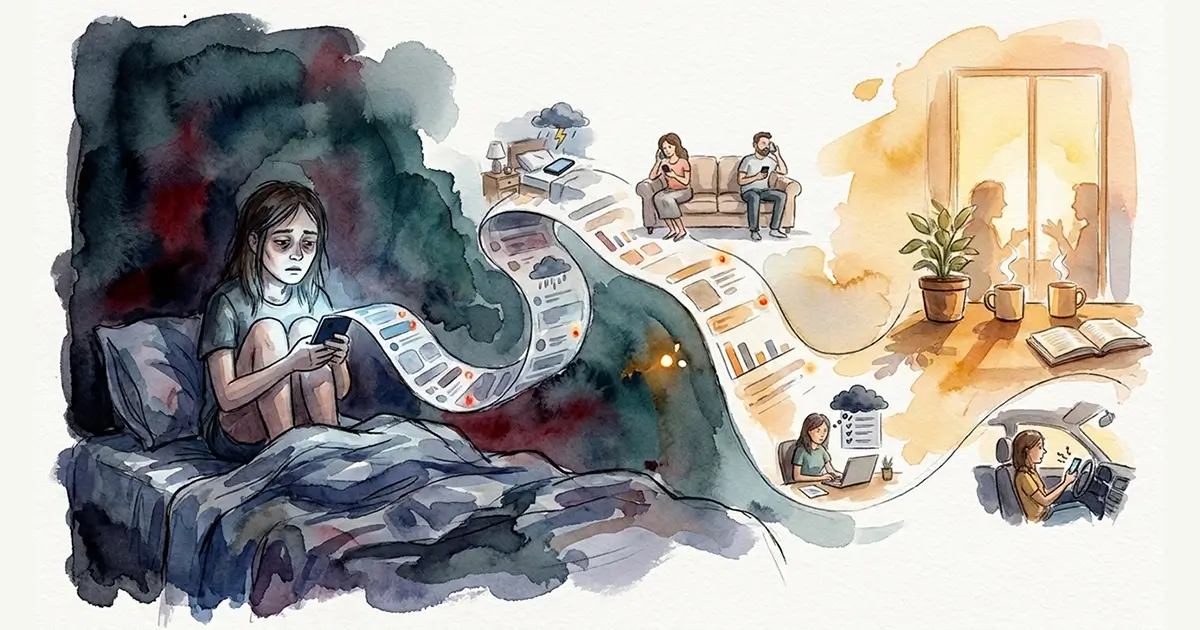
It starts with one headline. You open your phone to check the weather, notice an alarming notification, and tap it. Twenty minutes later, you are reading comment threads about a crisis on the other side of the world, your shoulders are tight, and you cannot remember what you originally wanted.
If that sounds familiar, you are not alone. Doomscrolling is one of the most common digital habits of the past few years, and most people only recognize it after the fact. The trouble is that it rarely feels like a problem while it is happening. It feels like being responsible.
This guide walks through four realistic doomscrolling examples, the warning signs to watch for, and a short test to help you tell the difference between doomscrolling and staying informed.
What Is Doomscrolling on Social Media?
Before the examples, a quick definition. Doomscrolling is the compulsive habit of scrolling through negative news or posts long after they stop being useful. If you want the full background, our guide on what doomscrolling is covers it in depth.
On social media, the pattern is easy to fall into. Feeds are built to keep you moving, and bad news holds attention better than calm news. Each swipe promises that the next post might finally make things feel resolved. It rarely does, so you keep going.
The key idea is that doomscrolling is defined less by what you read and more by how you read it. A single scroll through hard news can be fine. A scroll that cannot end is the problem.
Doomscrolling Examples: 4 Real-Life Cases
Each of these scenarios is built from patterns that show up again and again. See whether any feel close to home.
Example 1: The Midnight Headline Spiral

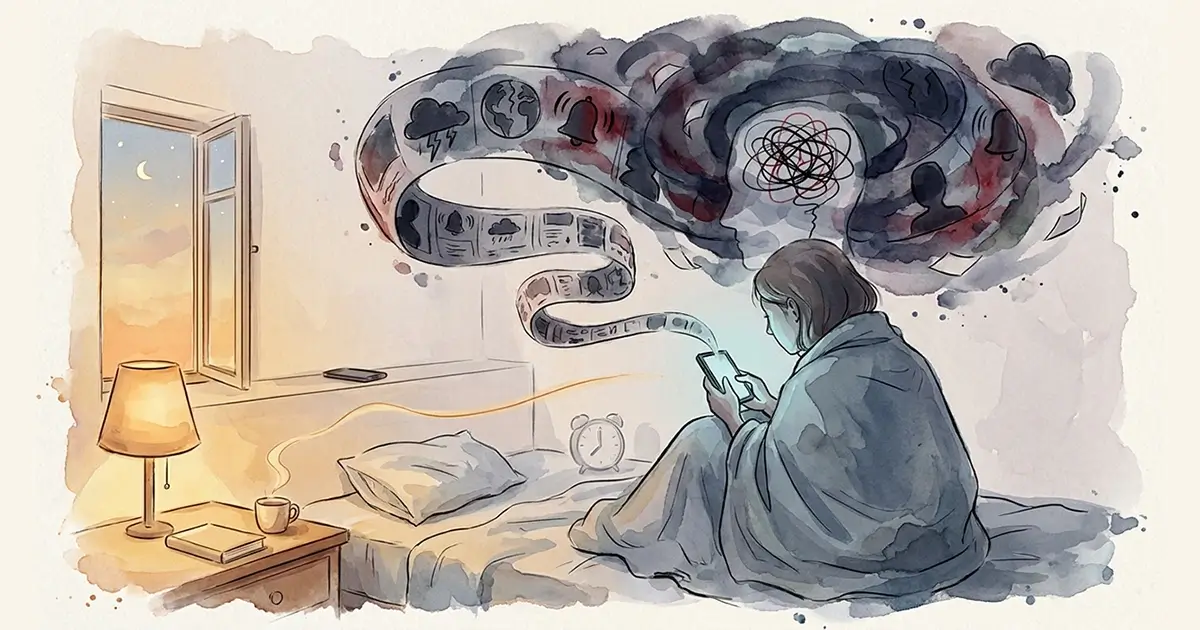
Marcus, a 34-year-old accountant in Chicago, gets into bed at 10:30 p.m. planning to sleep. He opens his phone to set an alarm and sees a breaking news alert about a regional storm.
He taps it. Then he reads a thread about the damage. Then another about whether officials responded fast enough. By midnight, he is watching shaky video clips and reading strangers argue in the replies.
Marcus is not learning anything new after the first ten minutes. The same facts are repeating in different packaging. Still, he keeps going, because stopping feels like turning away from something important. He tells himself he will stop after one more article. That sentence repeats about a dozen times.
At 12:40 a.m., he finally puts the phone down, wired and uneasy. He sleeps badly and starts the next day tired and irritable.
What makes this doomscrolling: There was no goal, no stopping point, and the habit cost him sleep without giving him anything useful in return.
Example 2: The Couple on the Same Sofa

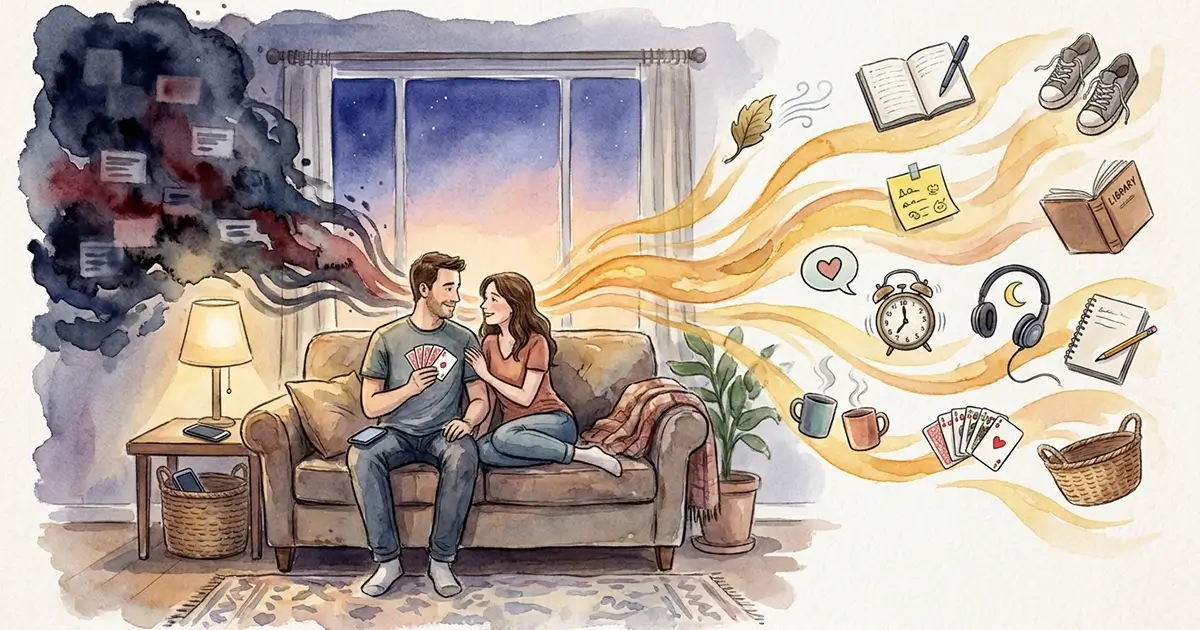
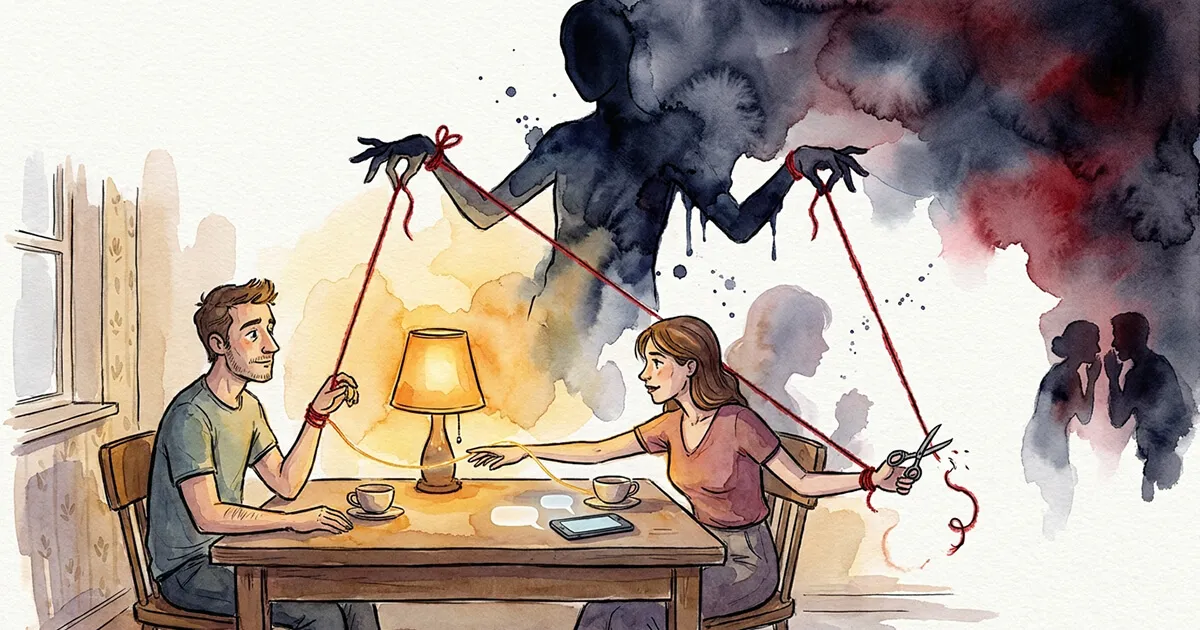
Daniel and Mei Ling, a married couple in Singapore, have a nightly ritual: dinner, dishes, then the sofa. Lately the sofa has changed. Both of them sit with phones in hand, scrolling through news about the economy and layoffs, sharing the worst headlines out loud.
“Did you see this?” Daniel says. Mei Ling nods and reads him another. For an hour, they trade bad news back and forth, each one raising the stakes a little more.
Neither of them is relaxing. Neither is talking about their own plans, their own budget, or even their day. The conversation they might have had is replaced by a feed that keeps handing them worries that are not theirs to solve yet.
One evening, Mei Ling realizes they have not talked about anything personal all week. The news has become their only shared topic.
What makes this doomscrolling: The scrolling has become a shared habit that crowds out real connection, and it feeds anxiety rather than helping them make decisions.
Example 3: The Work Break That Eats the Afternoon

Jessica, a 29-year-old marketing coordinator in Austin, works from home. Around 2 p.m. her focus dips, so she takes a “quick break” on social media.
She meant to check one message. Instead, she lands on a video about job cuts in the tech industry, and the algorithm quietly serves her more: layoff trackers, worried comment sections, predictions of a downturn.
Forty-five minutes pass. Her task list has not moved, and now she feels behind and anxious about her own job, even though nothing at her company has changed.
She tries to make up for lost time by working late, which means less rest and a weaker focus the next day. The cycle repeats.
What makes this doomscrolling: The scrolling was meant as a pause but turned into a source of stress that spilled directly into her work and her evening.
Example 4: The Spouse Who Needs to Know Everything

Rachel, 41, lives in Columbus, Ohio, with her husband, Tom. Whenever a major crisis is in the news, she feels a strong need to stay on top of every update. Checking feels like protection, as if being informed could keep her family safe.
So she checks at breakfast, in the car, during lunch, and in the bathroom at night. Tom notices that she flinches at every phone buzz and drifts away mid-conversation.
When he gently asks whether she could take a break, she says, “I just need to know what is going on.” But she is not learning anything new. She is rereading the same developments, hoping the next refresh will finally bring certainty.
What makes this doomscrolling: The need for certainty drives the habit, and the habit never delivers it. Her husband sees the toll before she does.
Signs of Doomscrolling to Watch For
Doomscrolling rarely announces itself. These are the signs of doomscrolling that show up most often:
- You lose track of time. A “quick look” regularly turns into 30 minutes or more.
- You feel worse, not better. Your mood drops, your chest feels tight, or you feel on edge afterward.
- You cannot stop even when you want to. You tell yourself “one more,” and keep going.
- You repeat the same stories. You are not finding new information, only new versions of the same worry.
- It happens at vulnerable times. Late at night, first thing in the morning, or during stressful moments.
- It crowds out real life. Sleep, meals, work, and conversations with your spouse or family take a back seat.
Having one sign now and then is normal. A pattern is what matters. If three or more of these sound familiar, your scrolling habit deserves a closer look.
Doomscrolling vs Staying Informed: A Quick Test
Staying informed is a healthy choice. Doomscrolling only looks similar from the outside. If you keep wondering, “Am I doomscrolling?”, ask yourself these five questions the next time you pick up your phone to read the news.
- Do I have a purpose? Informed readers look for something specific, like a weather warning for tomorrow or a policy change that affects them.
- Do I have an endpoint? Informed readers stop when they have the facts. Doomscrollers stop when they run out of energy.
- Am I learning something new? If every article repeats the last one, you are looking for comfort, not information.
- Can I act on it? Useful news changes what you do, such as how you prepare, vote, or plan.
- How do I feel afterward? Informed readers feel steady or at least clear. Doomscrollers feel drained, tense, or numb.
If you answered no to most of these, you are probably doomscrolling. That is not a character flaw. It is a habit, and habits can be changed.
Is Reading the News Doomscrolling?
Not by itself. Reading the news is doomscrolling only when it becomes endless, anxious, and unproductive. A twenty-minute read of a few trusted sources with a clear stopping point is informed reading. Two hours of refreshing alerts is something else.
The format matters too. Reading one full article gives context. Scrolling a feed of fragments, clips, and angry replies gives you emotion without understanding, which is exactly the mix that keeps you hooked.
Why Doomscrolling Is So Hard to Stop
The brain treats threatening information as urgent. When something feels dangerous, your attention locks onto it in case you need to act. Social platforms use this by serving more of whatever you linger on, so a few seconds of attention can reshape your entire feed.
Over time, the habit can affect sleep, mood, focus, and even your relationships. We explore those effects in more depth in our next article on the effects of doomscrolling.
How to Interrupt the Loop
You do not need to quit the news. You just need to give your scrolling a shape.
- Set a stopping point. Decide before you start: two articles, ten minutes, then done.
- Choose sources over feeds. Visit one or two trusted outlets directly instead of relying on a feed.
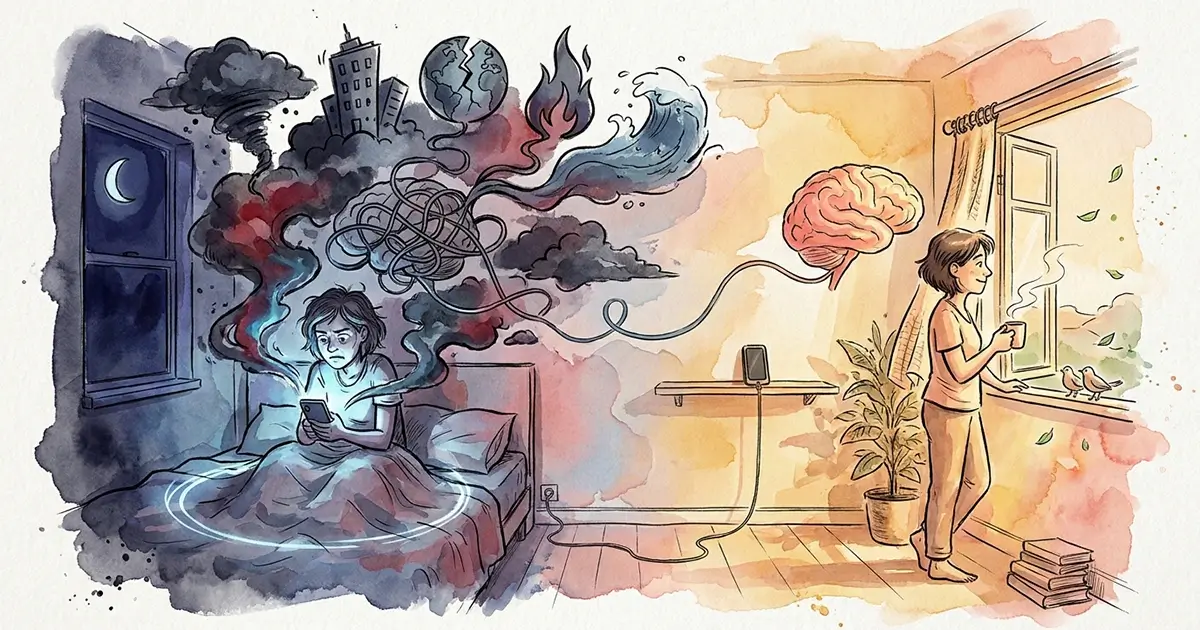
- Keep your phone out of the bedroom. Charge it across the room so the late-night spiral loses its easiest entry point.
- Talk to your spouse or a friend. Agree on a news-free hour each evening, and use it to talk about your own lives.
- Notice the urge. When you feel the pull to refresh, take one slow breath and ask what you are hoping to find.
Frequently Asked Questions
What is doomscrolling?
Doomscrolling is the habit of continuously scrolling through negative news or social media content, often long after it stops being useful or informative. It tends to leave people anxious, tired, and more worried than when they started.
How do I know if I am doomscrolling?
Look at the pattern, not just the content. If you lose track of time, feel worse afterward, and cannot stop even when you want to, you are likely doomscrolling. The test above can help you check.
Is reading the news every day bad?
No. Daily news reading is fine when it is purposeful and limited. The problem is not frequency but compulsion. If you can read a few stories, close the app, and move on, you are staying informed.
Why do I doomscroll even when it makes me anxious?
Uncertainty is uncomfortable, and scrolling feels like a way to resolve it. The brain also pays extra attention to threats. Together, these make it hard to stop, even when you know the habit is not helping.
Can doomscrolling affect a marriage?
It can. When one or both spouses spend evenings absorbed in feeds, there is less room for conversation, affection, and shared downtime. Setting a shared screen-free window is a simple way to protect that time.
Does doomscrolling only happen on social media?
No. It can happen on news sites, video platforms, forums, and even news apps. Social media is the most common place because feeds never end, but any endless stream of bad news can trigger the same loop.
Final Thoughts
Doomscrolling is easy to miss because it looks like responsibility. Marcus thought he was keeping up with a storm. Daniel and Mei Ling thought they were sharing information. Jessica thought she was taking a break. Rachel thought she was protecting her family.
None of them were doing anything wrong on purpose. They were caught in a loop that feels productive but rarely is.
The takeaway is simple. Staying informed has a purpose, a limit, and a clear end. Doomscrolling has none of these. When you notice the difference, you can choose when to read, when to stop, and when to look up and talk to the people in front of you.
The goal is not to care less about the world. It is to care in a way that leaves you able to function and connect.
What have you noticed about your own scrolling habits? Share your thoughts in the comments below, because your experience might be exactly what another reader needs to hear.
Comments (0)
No comments yet. Be the first to share your thoughts!
Leave a comment
Your comment will appear after it's reviewed. Your email is never shown publicly.